Beeb Speech Synthesiser
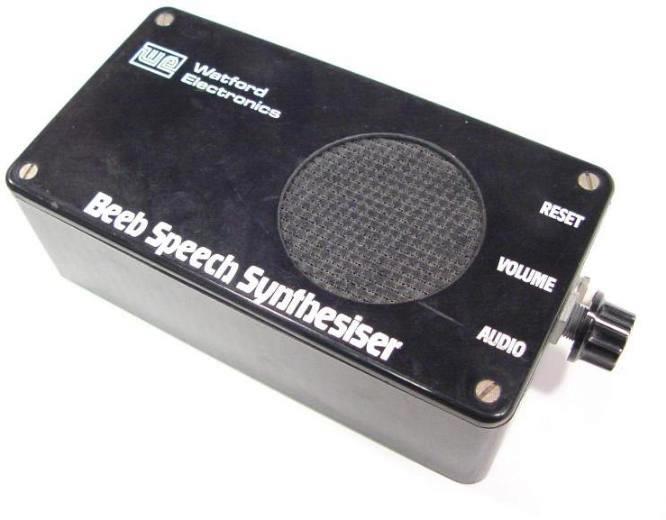
Image gallery
Find a Beeb speech synthesiser for your collection
Search for Watford’s speech unit and supporting material. Check whether the matching software ROM is included.
Search eBay for Beeb speechAn independent voice for the BBC Micro
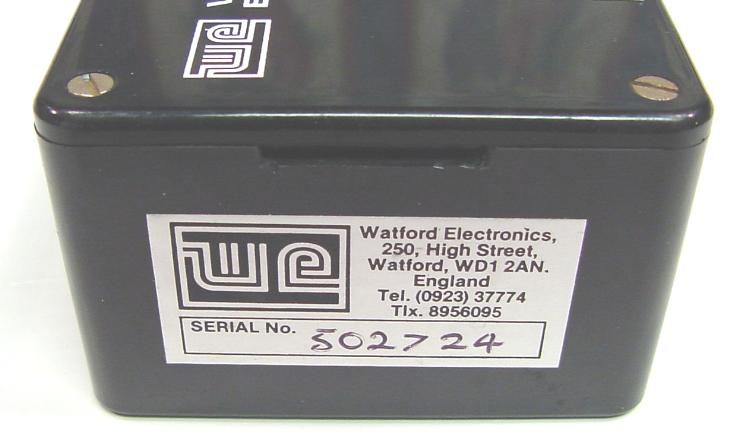
Watford Electronics’ Beeb Speech Synthesiser was an external speech unit for the BBC Micro. A December 1983 manufacturer flyer advertised a ROM-controlled system that could construct words from speech sounds, with an English accent and an approximately 500-word library to help users get started.
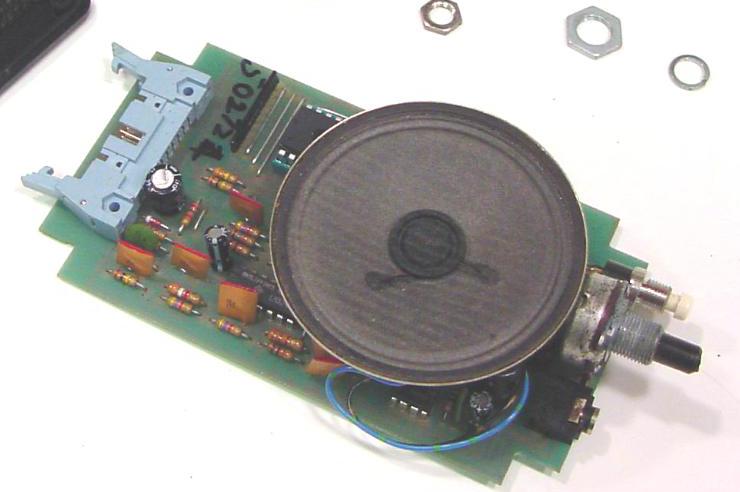
The package combined a software ROM installed in the computer with a speech box connected to the BBC’s user port. Its own loudspeaker, volume control, reset button, and audio connection made it a self-contained companion to the computer. The unit used the user I/O interface rather than an RS-232 serial connection.
Building words from allophones
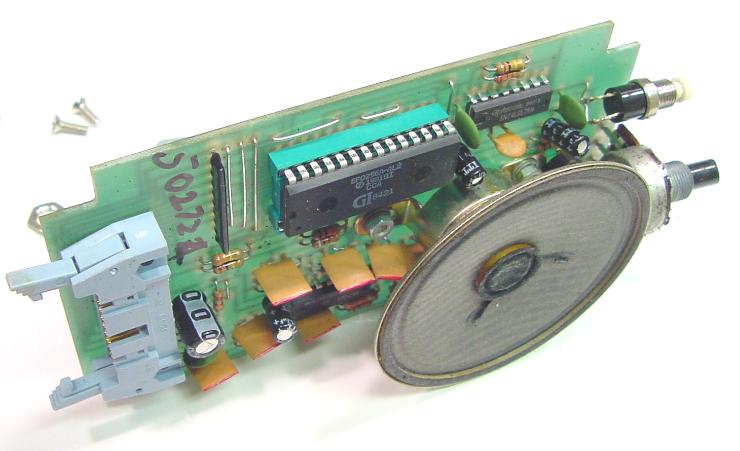
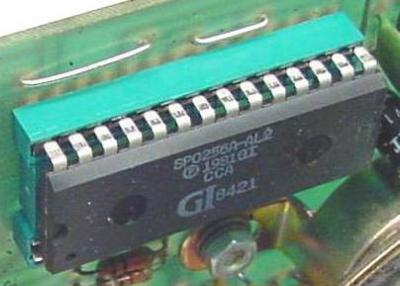
The circuit board carries a General Instrument SP0256A-AL2 speech processor. The AL2 sound set supplies allophones—individual speech sounds that can be arranged into words—rather than a fixed catalog of recorded sentences. A program selects the sounds needed for an utterance.
The Watford software added convenient word definitions above that sound set. Library words were stored as sequences of allophones, and owners could combine those words with their own sound sequences. An unfamiliar word required a suitable pronunciation sequence; the promise of unlimited vocabulary did not mean automatic conversion of every English spelling.
The *TALK command and a speaking queue
The operating manual shows *TALK accepting library words or named allophones. Its example *TALK HH1 EH LL OW constructs “hello.” Adding a plus or minus after an allophone changes inflection, while pause codes help shape the rhythm.
A 62-allophone software queue let the BBC continue running a program while speech played. Interrupts requested the next sound. Once the queue filled, a call could wait for space, so speech was asynchronous without being unlimited.
The manual also provided OSBYTE, OSWORD, *FX25, and BASIC SOUND access. That let machine-code programs and other languages use the same speech software.
The people behind the voice
The 1984 operating manual credits Martin Poole with producing the synthesizer and its driving software. David Harris and Matthew Rapier wrote the manual. Their documentation encouraged owners to experiment with sounds and inflection rather than merely replaying a few demonstration phrases.
An unusual connection to Elite
The special Executive build of the BBC Micro/6502 Second Processor version of Elite included support for Watford’s unit. Its speech data contains a title announcement, an incoming-missile warning, a low-energy warning, and a profane reaction to a mis-jump.
This was a feature of that particular build, rather than a guarantee that every copy of Elite would talk. The preserved source shows the game sending *TALK commands containing allophone sequences and library words. It is a vivid example of programmers giving a space adventure its own electronic voice.
Keeping the box and ROM together
The speech box and matching software ROM form one system. The ROM supplies the command interface, pronunciation definitions, and speech queue; the external hardware produces the sound. Preserving both retains the behavior owners programmed.
Mark Moxon’s Executive Elite research demonstrates the combination in MAME and presents recordings from that emulated setup. The documentation makes it possible to study how the game used the synthesizer even when the complete hardware is unavailable.
Specifications
- Manufacturer
- Watford Electronics
- Product
- Beeb Speech Synthesiser
- Platform
- BBC Micro
- Connection
- BBC user I/O port
- Speech processor
- SP0256A-AL2
- Software
- Sideways ROM with word library and speech commands
- Speech queue
- 62 allophones, interrupt-driven
- Main command
- *TALK
- Audio
- Built-in speaker; volume control and external audio socket
- Documented period
- December 1983 advertising; 1984 manual
Sources and further reading
- Watford Electronics: speech synthesizer operating manual, HTML archive
- Watford Electronics: December 1983 show-offer flyer
- Centre for Computing History: Beeb speech unit and software collection
- Elite preserved source: speech phrase definitions
- Mark Moxon: Executive Elite speech behavior and emulated demonstrations