SPEECH CHIP COLLECTION
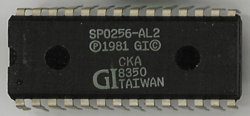
SP0256-AL2
SP0256 speech processor with the factory-programmed AL2 internal ROM: 59 allophones and five pauses.
Overview
The SP0256-AL2 is an SP0256 with the AL2 speech program manufactured into its internal 16-kilobit ROM—2,048 bytes, not 16 kilobytes. AL2 supplies 59 allophones and five pauses, selected by 64 codes. The suffix identifies those built-in contents; there is no separate AL2 ROM chip to plug in. It is also important not to confuse it with the CTS256-AL2, a separate text-to-speech companion. The internal ROM is mask-programmed during manufacture, so an ordinary programmer cannot erase it or replace its vocabulary after purchase.
Explore the SP0256 family, gallery, and samples →
Find an SP0256-AL2 for your collection
Search for SP0256-AL2 chips, boards, and documentation, including the common SPO256 spelling. Check the suffix and chip markings: other SP0256 versions contain different speech ROMs.
Search eBay for SP0256-AL2Why allophones made AL2 useful
An allophone is a particular realization of a speech sound. By choosing these building blocks in sequence, a computer can attempt new words without a stored recording of every word. This is the basis of AL2’s “unlimited vocabulary” description: it means words can be assembled, not that the chip understands written English. Software—or the CTS256-AL2—must convert spelling into sound codes. The stock allophones have programmed pitch and timing rather than a set of normal host commands for arbitrary intonation. Sound selection and pauses help phrasing, and changing the clock shifts both pitch and speed. Concatenation does not provide all the transitions of fluent speech, which helps explain AL2’s recognizable robotic accent.
How a tiny chip reconstructs a voice
Rather than store a continuous recording as thousands of waveform samples, the SP0256 stores instructions and compact descriptions of how a voice changes over time. Linear predictive coding (LPC) models speech as an excitation signal shaped by the resonances of the vocal tract. For voiced sounds, the excitation is a repeating pulse train whose spacing determines pitch; for unvoiced sounds, such as hiss-like consonants, it is noise. A 12-pole digital filter shapes that source into speech. Changing its coefficients changes the simulated resonances; amplitude, pitch, and timing parameters control other features of the sound.
Why provide an external ROM interface?
Two kilobytes is a small budget for complete phrases. An appliance might need only a few announcements, but a talking game, clock, or computer peripheral could need much more. External speech ROMs supplied additional encoded speech programs without redesigning the synthesis engine. They could hold complete words and phrases, specially prepared voices, melodies, or effects. A custom phrase program can preserve acoustic changes within a whole utterance that simple concatenation of isolated allophones may miss. Extra memory therefore expands the available speech content; it does not turn the SP0256 into a new kind of synthesizer.
Alphabet — Currah SP0256-AL2
Currah Voice Messenger alphabet; the final letter is pronounced “zed.”
Digits — Currah SP0256-AL2
Currah Voice Messenger: digits one through nine, then zero.
By your command — Currah SP0256-AL2
Currah Voice Messenger demonstration using a lower clock rate.
SP0256-AL2 allophone demonstration
The individual AL2 speech sounds, recorded during chip experiments.
Voice Messenger — low voice
Currah Voice Messenger: “VOICE MESSENGER SPEECH SIXTY 4,” using its low voice setting.
Voice Messenger — high voice
The same phrase using the Currah Voice Messenger’s high voice setting.
The “I” sound
AL2 sound-code demonstration from the ooPIC experiments.
Experimental address scan
An experimental scan of addresses outside the normal AL2 sound set; includes static and other sounds.
The ooPIC is talking
A phrase assembled from AL2 allophone codes.
Standby signal experiment
Recording from the ooPIC experiment using the standby signal to control speech-code loading.
Documentation and downloads
Machines using this chip
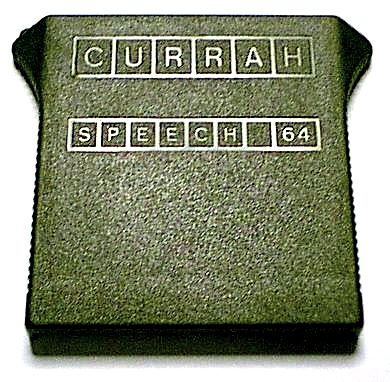
Currah
Currah Speech 64 / Voice Messenger
The Currah Speech 64 gave the Commodore 64 a speaking voice, with built-in text-to-speech, direct allophone control, and two selectable voices.
Explore Currah Speech 64 / Voice Messenger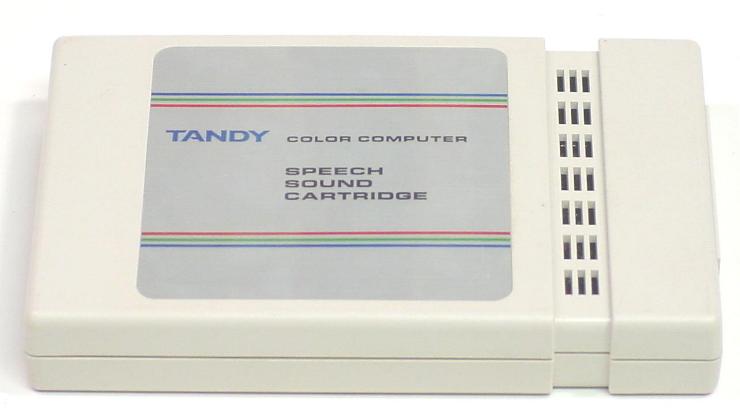
Tandy
Speech/Sound Cartridge
Tandy’s CoCo cartridge combined SP0256-AL2 text-to-speech with AY-3-8913 music and effects, managed by a dedicated controller.
Explore Speech/Sound Cartridge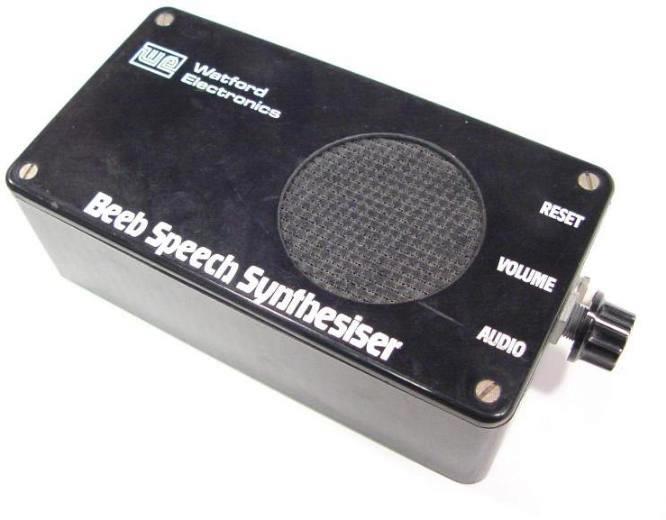
Watford Electronics
Beeb Speech Synthesiser
Watford Electronics’ BBC Micro user-port speech unit paired an SP0256A-AL2 with ROM software, a word library, and interrupt-driven allophone playback.
Explore Beeb Speech Synthesiser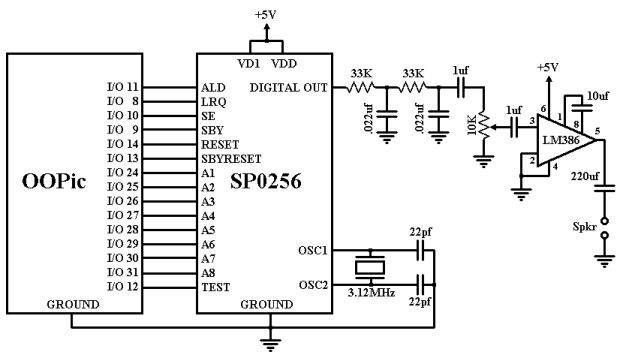
SP0256 ooPIC experimentation board
Part of the talking-machine collection.
Explore SP0256 ooPIC experimentation board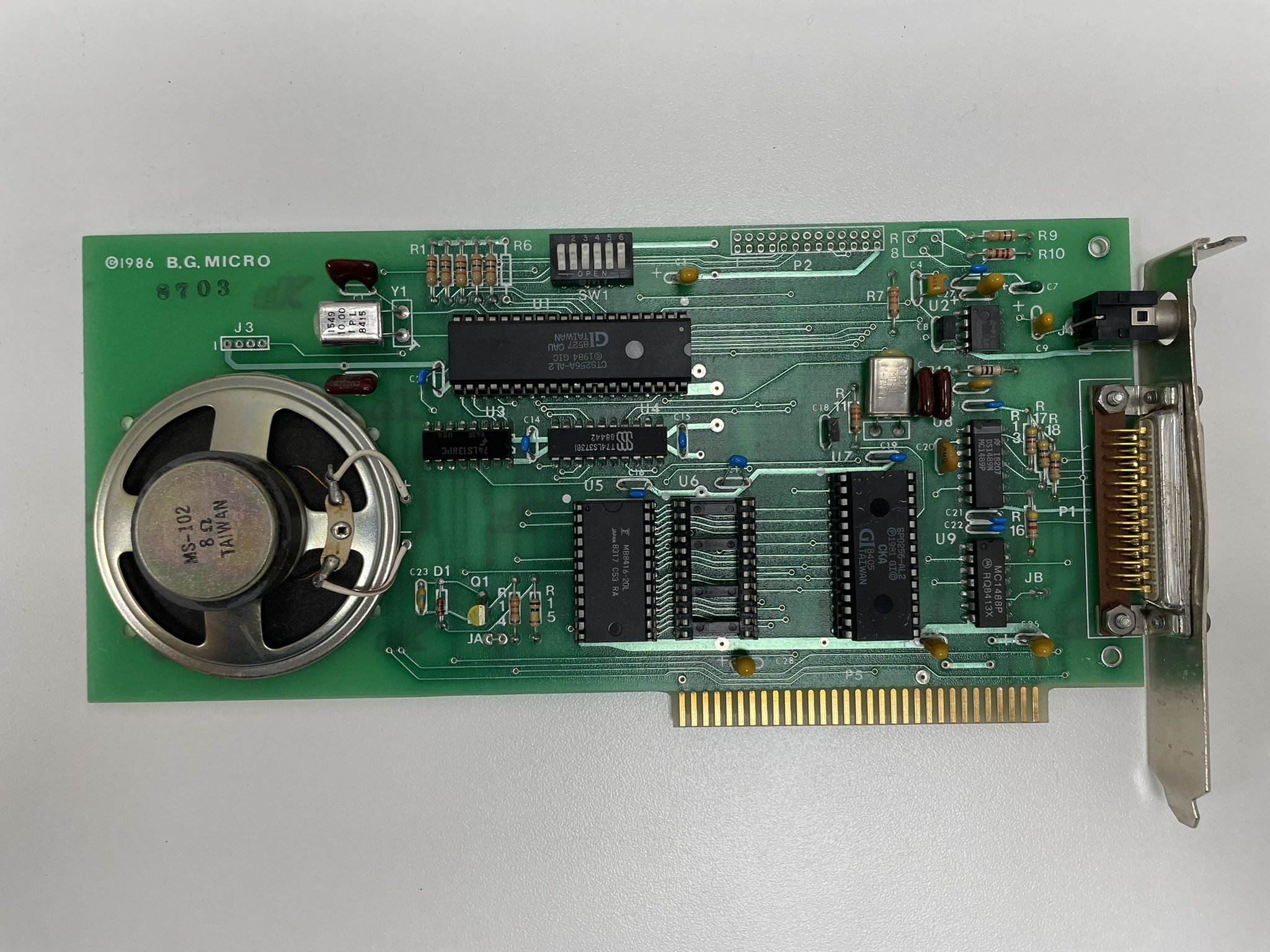
B.G. Micro
B.G. Micro Computalker Speech Board
An RS-232 text-to-speech board pairing CTS256A-AL2 with SP0256-AL2; its ISA connector supplies power.
Explore B.G. Micro Computalker Speech Board