SSI-263 Speech Synthesizer Demo Board
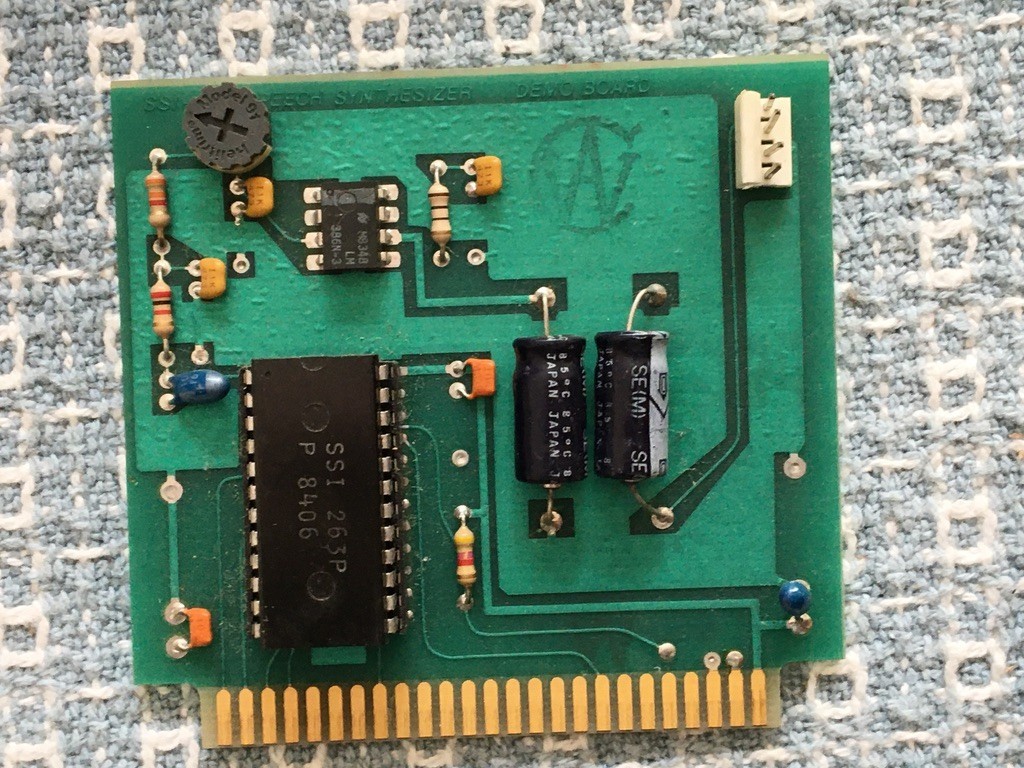
Image gallery
Find SSI-263 demonstration hardware
Check whether listings offer a complete board, a bare PCB, or only the chip.
Search eBay for SSI-263 demo boardsA speech chip on a compact demonstration card
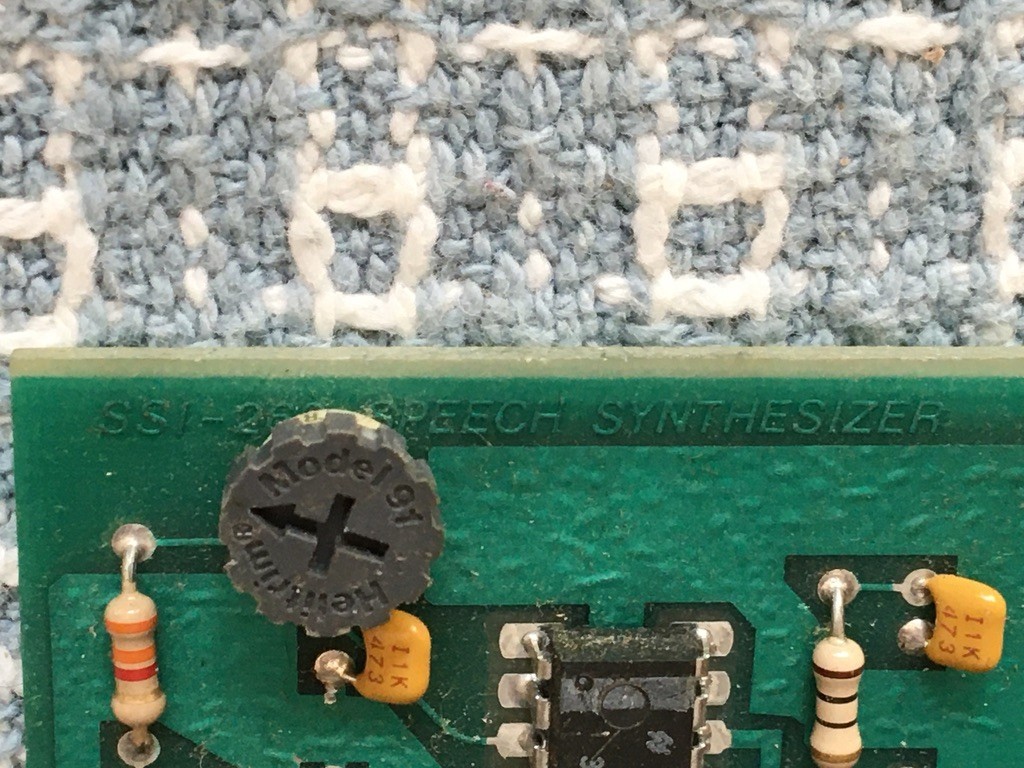
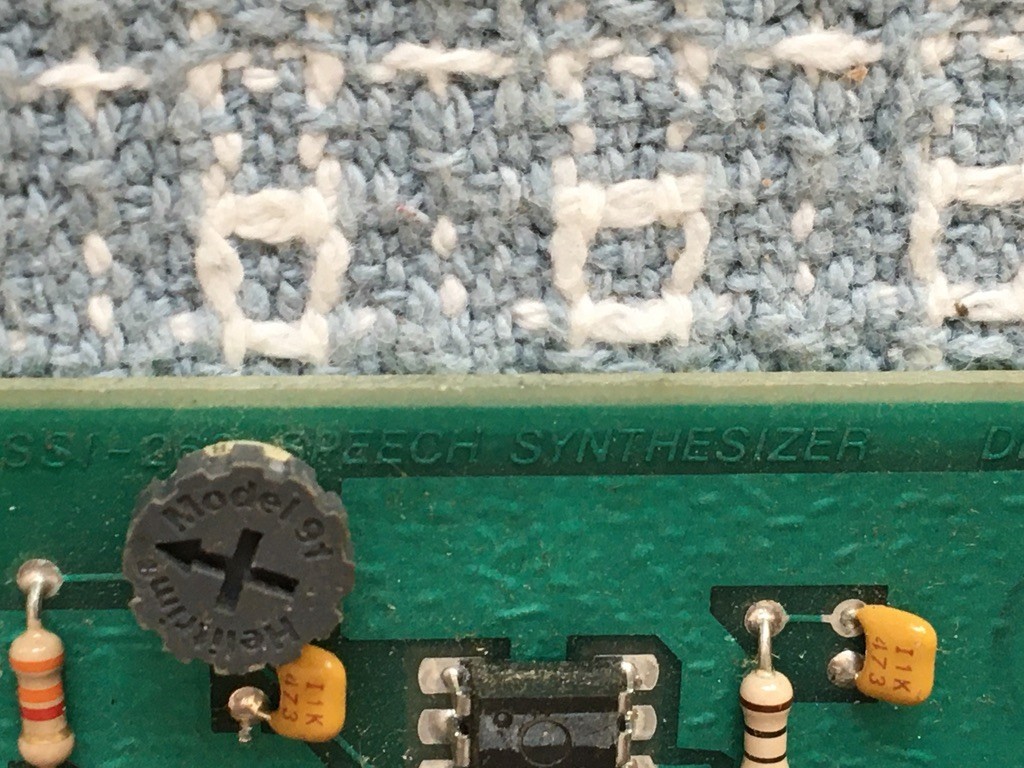
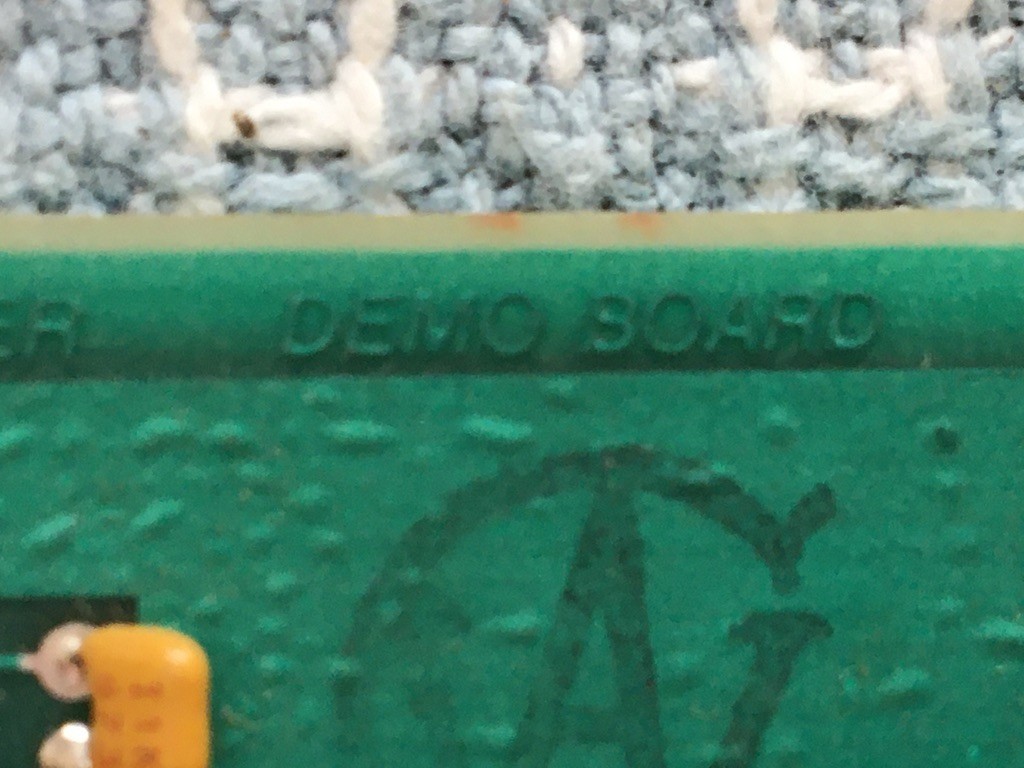
The circuit board identifies itself as an SSI-263 Speech Synthesizer Demo Board. At its center is a chip marked SSI 263P, with the additional marking P 8406. The small card brings the speech device together with an audio amplifier, a trimmer, a four-pin connector, and only a handful of passive components.
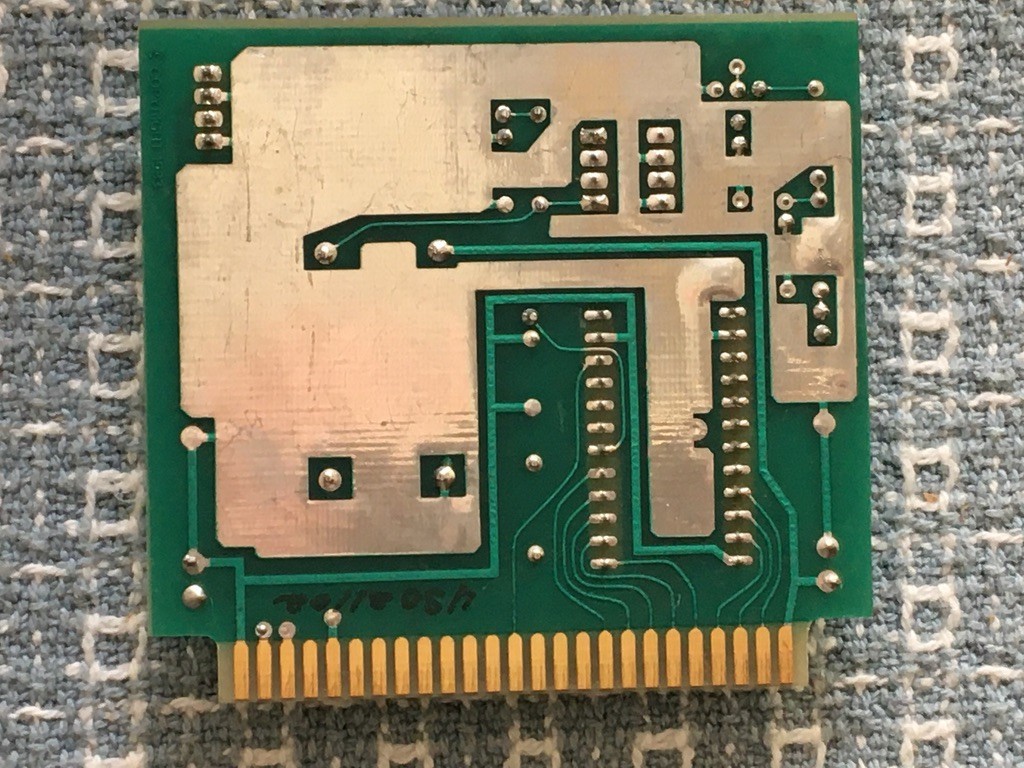
Its edge connector and overall format are consistent with an Apple II expansion card, but a board-specific manual or schematic has not yet established its wiring, supported slots, or software. The board’s maker and exact release date are also unconfirmed. The SSI marking identifies the speech-chip family; it does not by itself prove who manufactured the card.
Building a voice from sounds
The SSI-263 belongs to the Votrax SC-02 / Silicon Systems phoneme-synthesis line. It builds speech from a sequence of sounds rather than playing stored recordings of complete words. The related SSI-263A data sheet describes an eight-bit interface and five registers controlling phoneme selection and duration, speech rate, pitch movement, loudness, articulation, and vocal-tract filtering.
The manufacturer’s block diagram shows a phoneme-characteristics ROM supplying control information to voice and noise sources and a bank of filters. This ROM contains sound parameters, rather than a dictionary of recorded sentences. The resulting vocabulary depends on the sound sequences supplied by the host. The pictured chip is an SSI 263P; the linked A-revision documentation is useful family background, not proof that every later behavior applies to this earlier part.
The software supplies the pronunciation
A phoneme synthesizer is not a text reader by itself. A program must translate spelling into sounds or supply phonetic sequences directly. Silicon Systems’ programming guide explains why letters and sounds do not match one-for-one: different spellings can produce the same sound, while the same letter can have different pronunciations.
The guide also describes allophones, which provide variations on basic speech sounds, and silent states used for pauses and articulation. A pause is an active part of the programmed delivery: its timing and other settings can affect how adjoining sounds move into one another. This gave programmers a way to shape emphasis and rhythm as well as choose the words.
No ROM chip or separate processor is visible on this card. That observation fits a demonstration circuit controlled by a host computer, although the exact driver and text-to-speech software for this board remain undocumented.
From the synthesizer to a speaker
The eight-pin device is marked LM386N-1. The LM386 is a low-voltage audio power amplifier, so it serves a different purpose from the speech chip: amplifying the synthesized signal for an audio load. The photographs also show two electrolytic capacitors, several smaller capacitors and resistors, a trimmer, and a small connector. The trimmer’s function and connector pinout require a schematic or circuit tracing before they can be specified.
Part of the programmable-voice era
In March 1984, Steve Ciarcia’s BYTE article introduced the SSI263 in a third-generation phonetic speech project, following his earlier SC-01A-based Sweet Talker and Microvox designs. It captures the appeal of this period: improving speech hardware could be explored directly by programmers and electronics hobbyists.
This card presents that idea in particularly compact form. Its exposed components and simple layout make the relationship between the speech chip, host connection, and audio circuit easy to see. It is a demonstration board rather than a documented complete text-to-speech product with its own processor and vocabulary software.
Specifications
- Board marking
- SSI-263 Speech Synthesizer Demo Board
- Speech chip
- SSI-263P (package marked SSI 263P / P 8406)
- Audio amplifier
- LM386N-1
- Host interface
- Apple II-style card edge; exact pinout unconfirmed
- Board manufacturer / release date
- Not established
Documentation and downloads
- SSI-263A manufacturer data sheet
Related later-revision chip documentation, including the block diagram, interface, and register descriptions. The photographed chip is marked SSI 263P, without an A.
- Phonetic programming using the SSI-263A
Silicon Systems’ guide to phonetic spelling, pronunciation, pauses, and speech parameters. This is chip documentation, not a manual for this exact board.
- LM386 audio amplifier data sheet
Documentation for the amplifier family used in the photographed circuit.