SPEECH CHIP COLLECTION
SC-02 / SSI-263 / 78A263
A programmable vocal tract in a chip: the Votrax SC-02 / Silicon Systems SSI-263 brought expressive control to vintage electronic speech.
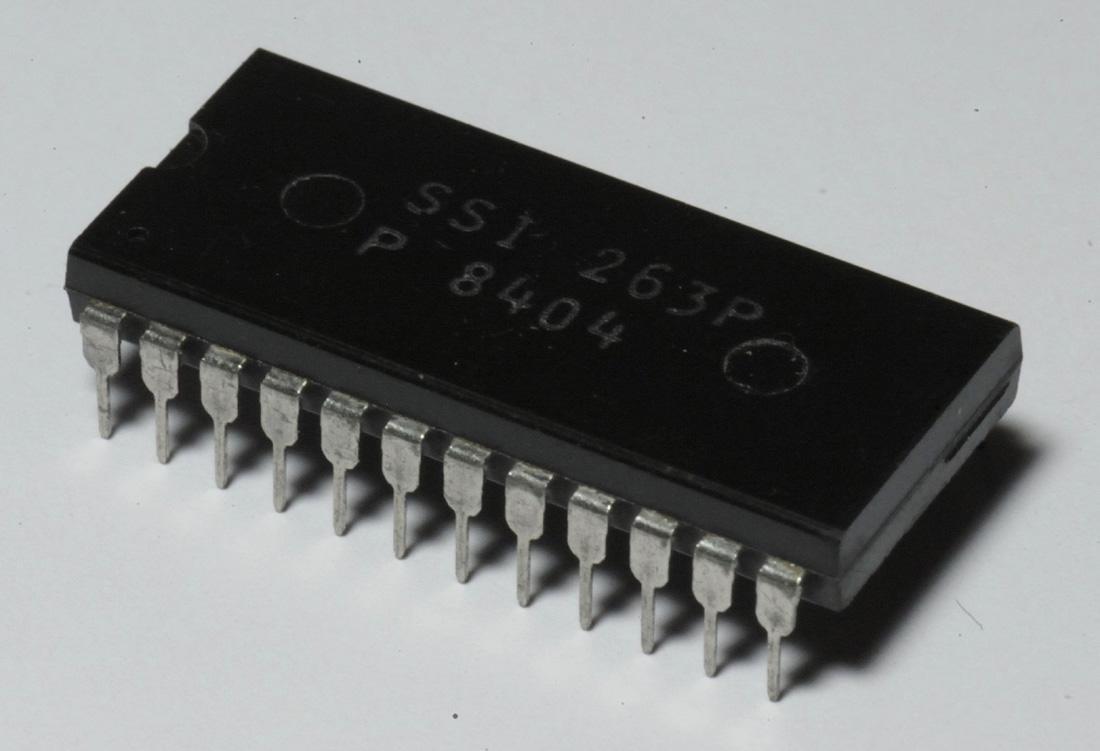
Overview
The SC-02, also known as SSI-263 and under the later 78A263 / 78A263A designations, followed the SC-01 / SC-01A with substantially greater software control. Both generations synthesize speech from phonemes using a model of the vocal tract. The SC-02’s advance was its expanded programmable control over pitch, timing, amplitude, articulation, and vocal-tract filter response. The result could be recognizably robotic, yet surprisingly expressive. This was the attraction of the chip: the programmer could become a voice designer.
Compare the Votrax family, interfaces, and voices →
Image gallery
Find an SC-02 / SSI-263 for your collection
Search chips, speech boards, and documentation under several period designations. Check photographs, revision markings, and condition before choosing a part.
Search eBay for SC-02 / SSI-263 / 78A263A second generation of Votrax speech
The SC-01 / SC-01A made phoneme speech accessible to arcade designers and computer enthusiasts. The SC-02 retained that sound-building approach while replacing the earlier interface with a richer register-based design. Steve Ciarcia featured the SSI-263 in “Build a Third-Generation Phonetic Speech Synthesizer” in BYTE’s March 1984 issue. His project placed the chip firmly in the hands-on world of home computers and electronics experimentation.
How an electronic vocal tract speaks
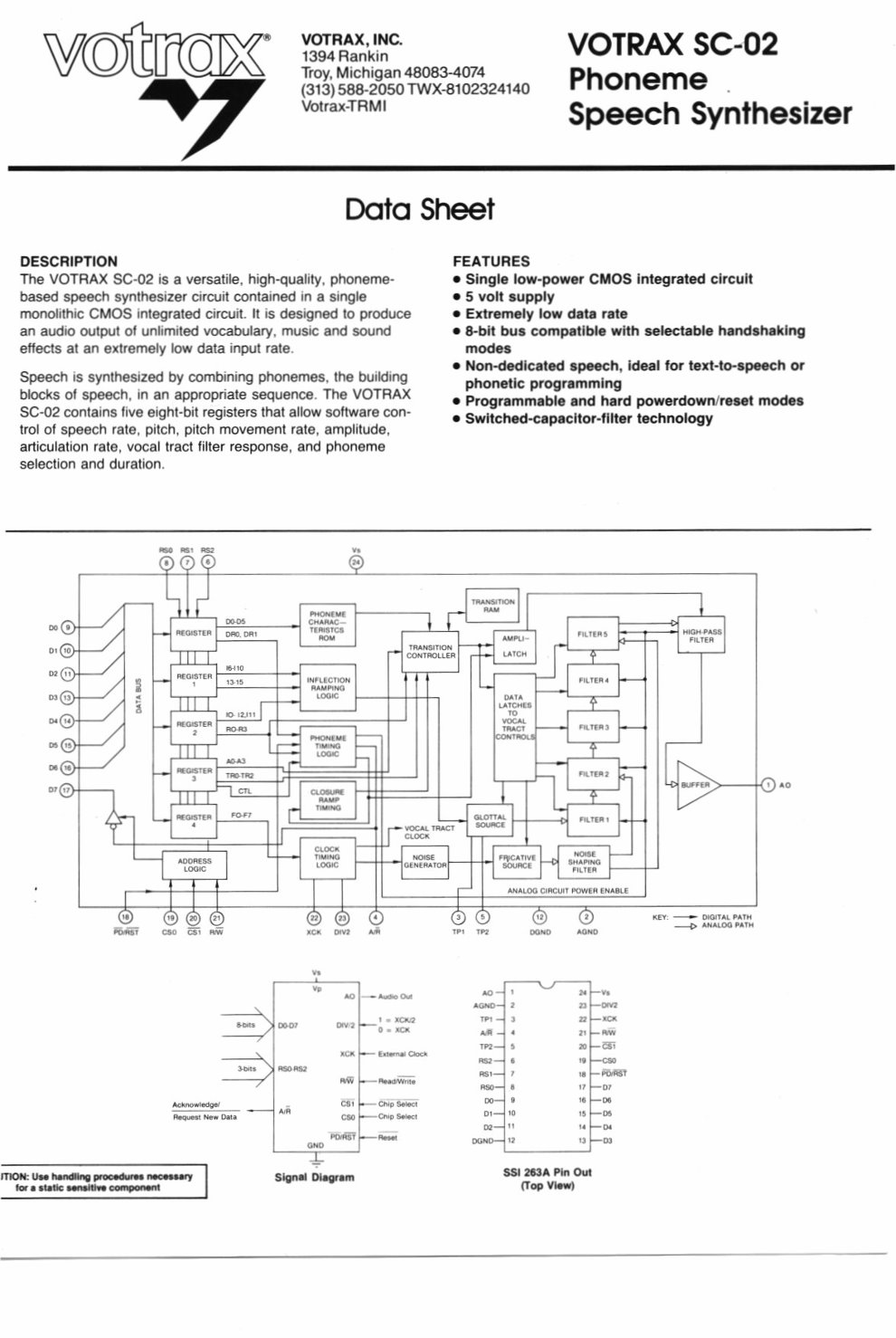
The SSI-263A models speech with five programmable low-pass filter sections. A glottal source supplies voiced sounds; a noise source supplies unvoiced sounds. Stored phoneme parameters set the tract, and internal transitions move toward the next sound. This is formant synthesis, not playback of recorded words. Its 64 sound codes are building blocks, not a 64-word vocabulary.
Pronunciation comes from the programmer
The chip does not read English spelling. Software must translate words into its phonetic alphabet, choosing sounds and their sequence. The programming guide distinguishes basic phonemes, alternate forms, and special silent or hold states. Diphthongs can be formed from successive sounds rather than needing a dedicated code for every vowel movement. That makes vocabulary open-ended, but pronunciation still depends on the supplied sequence. A text-to-speech board adds the spelling rules and exceptions that the speech chip itself lacks.
Shaping pitch, pace, and vocal character
The programming guide treats amplitude, duration, pitch, speech rate, pitch slope, articulation, and filter frequency as separate tools. Pitch shapes melody and sentence intonation; amplitude supplies emphasis. Duration stretches an individual sound, while rate changes overall pace. Articulation controls movement between sound settings. Filter frequency changes the tract’s response, providing another way to alter vocal character. The guide supplies starting values and pronunciation combinations so programmers can experiment systematically instead of guessing every setting.
Why the extra controls mattered
Compared with SC-01 / SC-01A, the extra controls gave an application more ways to make an utterance distinctive. A question needs a different contour from a warning; a key word needs emphasis; a vowel may need to linger. Voice programming can address those choices rather than relying on a single delivery for every sentence. More control does not automatically make speech natural: the quality of the phonetic sequence and the software’s decisions still matter. Its advantage is expressive flexibility, especially for experiments with character voices and unusual pronunciations.
A voice with an Australian accent
In a 1989 Eurospeech paper, Robin W. King described a University of New South Wales talking-videotex system using an SSI-263 connected to a PC’s parallel printer port. It helped blind users navigate information originally arranged for a screen. Software exploited the chip’s flexibility to produce an Australianised accent and to add stress, rhythm, and pitch contours. The project demonstrates a use beyond entertainment: speech characteristics could help listeners follow lists, questions, and other structured information. The paper also acknowledged the limits of automatically generated prosody, rather than claiming the chip could understand language.
SC-02, SSI-263, and 78A263 markings
Votrax’s 1985 documentation identifies the SC-02 with the SSI-263A, while photographed early hardware carries SSI-263P markings. Other markings in this line include 78A263, 78A263A, and SSI 78A263A. The museum groups these related names here, but preserves the full marking when identifying a specimen. The detailed electrical reference below describes the SSI-263A. Do not assume that a bare “263” description establishes a particular revision, or that the SC-02 can replace an SC-01 / SC-01A in its socket: the package, pinout, and interface differ. A complete chronology of the later 78A263 markings and early silicon changes requires revision-specific documentation.
From hobby speech to accessible computers
The SynPhonix 200 illustrates another important use: speech hardware supporting access to IBM-compatible computers. Later speech-equipped Mockingboard models brought the SSI-263 line to the Apple II; the earlier SC-01-based models remain a separate part of that board’s history. Burke & Burke advertised CyberVoice for Color Computer OS-9 users, with a SC-02 and software for changing pronunciation rules and voice characteristics. The related exhibits below distinguish fitted hardware from optional speech upgrades where the model information is available.
SSI-263A programming at a glance
| Register | Control |
|---|---|
| 0 — Duration / phoneme | 6-bit sound selection; 2-bit duration |
| 1 — Inflection | Pitch-control bits |
| 2 — Rate / inflection | Speech rate and remaining pitch bits |
| 3 — Control / articulation / amplitude | Operating control, transitions, volume |
| 4 — Filter frequency | Vocal-tract filter clock |
SSI-263A hardware essentials
SSI-263 — Danger
A demonstration of the SSI-263 voice.
Documentation and downloads
- Silicon Systems SSI-263A data sheet (PDF)
- Silicon Systems SSI-263A phonetic programming guide (PDF)
- 1986 Silicon Systems Data Book
- Silicon SSI 263A
- SSI-78A263A
- Votrax Patent 1974 US3836717
- Votrax Patent 1975 US3908085
- Votrax Patent 1981 US4264783
- Votrax Patent 1989 US4829573
- Votrax SC-02 SSI-263A Phoneme Speech Synthesizer Data Sheet 1985
Machines using this chip
Speech hardware varied between models and revisions. Some boards offered the speech chip as an optional upgrade; see each exhibit for its configuration.
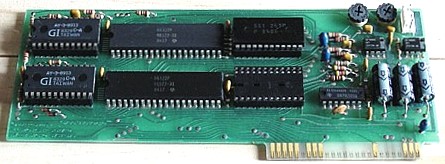
Sweet Micro Systems
Mockingboard
Sweet Micro Systems’ Apple II sound-card family combined music and effects with optional SC-01 or SSI 263 phoneme speech.
Explore Mockingboard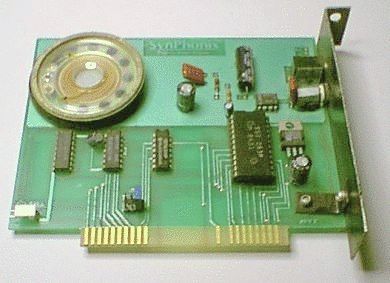
Artic Technologies
SynPhonix 200
Artic Technologies’ IBM PC speech card used SSI 263 phoneme synthesis and supported spoken screen access with Artic Vision.
Explore SynPhonix 200Micromint
Sweet Talker II
Micromint’s SSI-263 Apple II speech board, supplied with text-to-speech software.
Explore Sweet Talker IIMicromint
LIS’NER 1000
Micromint’s SP1000 speech-recognition interface, with an SSI-263 speech option for Apple II.
Explore LIS’NER 1000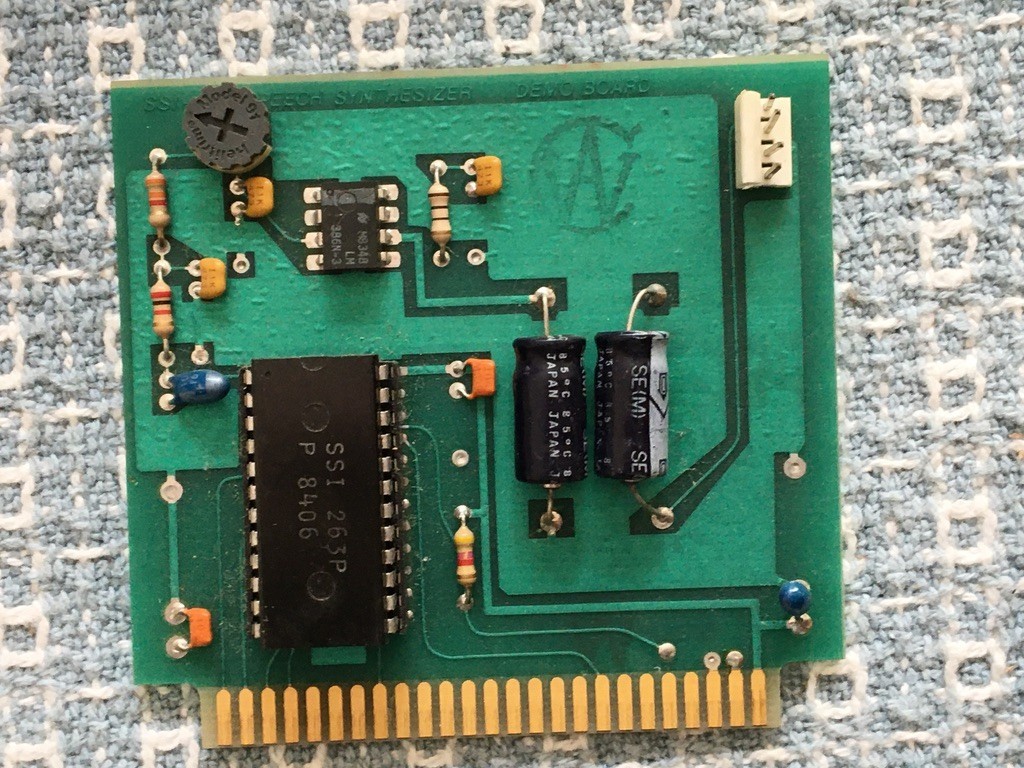
SSI-263 Speech Synthesizer Demo Board
A compact SSI-263P speech demonstration card with an audio amplifier and an Apple II-style edge connector.
Explore SSI-263 Speech Synthesizer Demo Board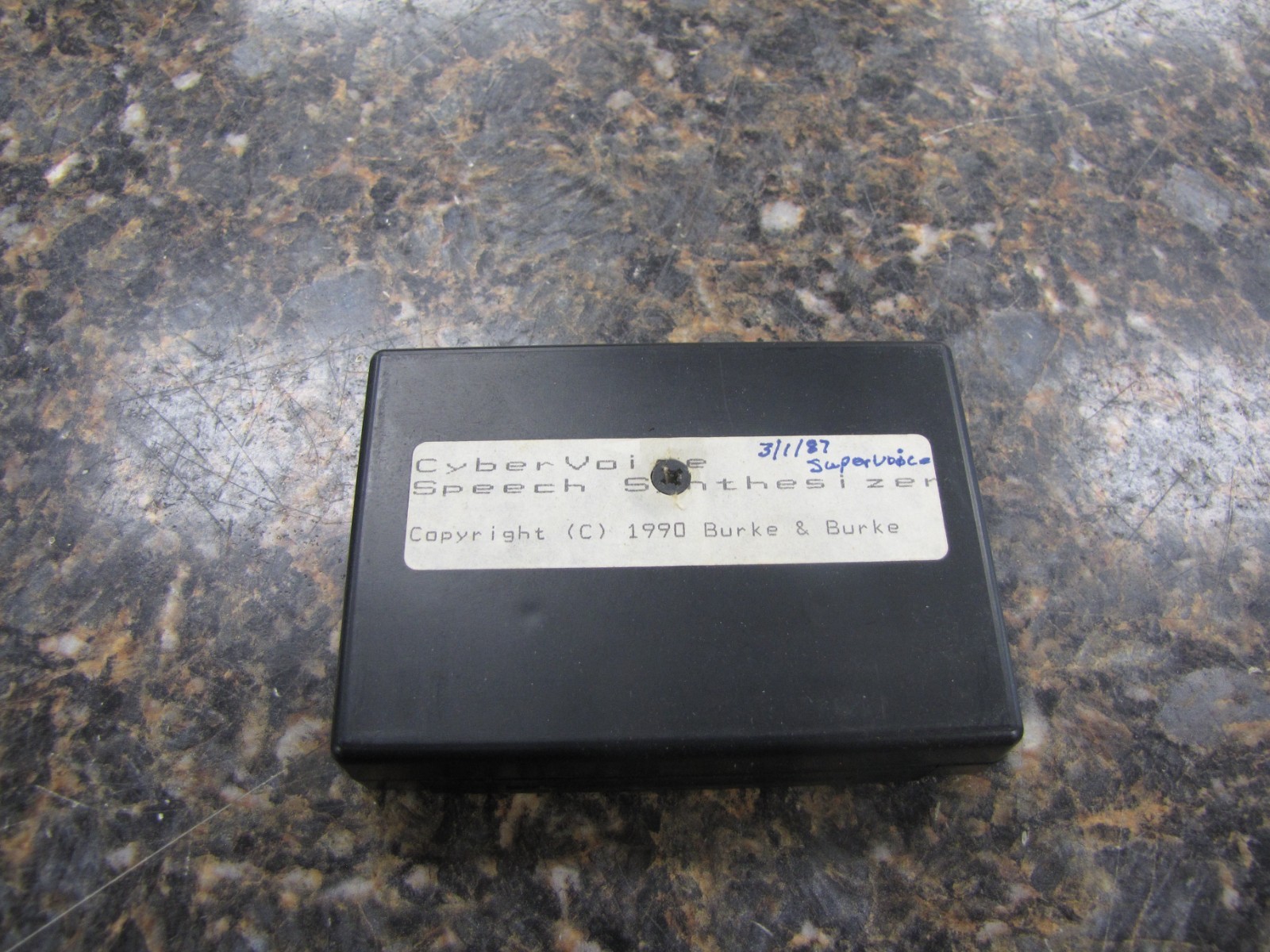
Burke & Burke
Burke & Burke CyberVoice
Burke & Burke’s SC-02-based speech cartridge paired programmable pronunciation and voice control with OS-9 Level II software.
Explore Burke & Burke CyberVoiceFurther references
- Silicon Systems: SSI-263A data sheet, including phoneme chart and register formats
- Silicon Systems: phonetic programming guide
- Votrax: SC-02 / SSI-263A data sheet, 1985
- Steve Ciarcia: Build a Third-Generation Phonetic Speech Synthesizer, BYTE, March 1984
- Robin W. King: Layout Processing, User Control and Prosody Insertion in an On-Line Synthetic Speech System, Eurospeech 1989
- Burke & Burke: CyberVoice advertisements
- Sweet Micro Systems / ReActiveMicro: Mockingboard models and hardware documentation