IBM PS/2 Speech Adapter
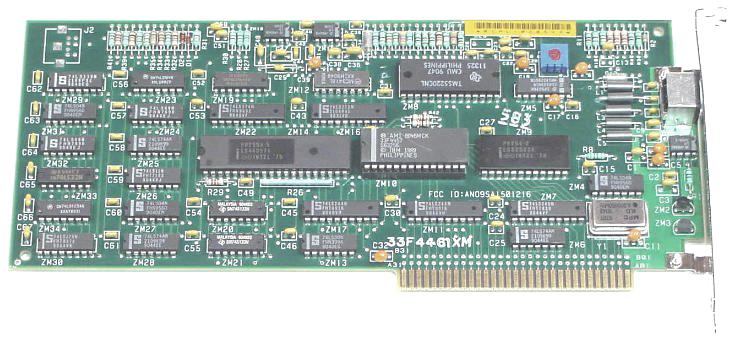
Image gallery
Find an IBM Speech Adapter for your collection
Search for PS/2 Speech Adapter boards and related parts. Check whether the control assembly, cable, and software are included.
Search eBay for IBM Speech AdapterIBM’s voice for the Personal System/2
The IBM Personal System/2 Speech Adapter brought dedicated voice hardware to IBM’s late-1980s computers. It combined synthesized speech with the ability to encode and reproduce recorded sound. The two functions used different circuits and different representations of speech.
IBM’s April 1987 product reference lists the adapter for the PS/2 Model 30. Later options documentation includes the Model 25 family. The adapter used the PC expansion bus—an 8-bit ISA connection—so the PS/2 name does not make this a Micro Channel card.
The LPC speech path
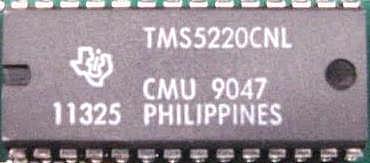
The TMS5220C generated speech using linear predictive coding, or LPC. Encoded data describes the changing characteristics of a voice; the synthesizer reconstructs the sound from that compact representation. This differs from playing back a conventional uncompressed recording.
The TI speech processor belongs to a family that can accept speech data from the host computer as well as work with speech ROMs. It is an encoded-speech engine, rather than a chip that independently converts English spelling into pronunciation. The surrounding software and stored speech material determine what the system says.
A second path for recording and playback
The Motorola MC3418 handled continuously variable slope delta modulation, usually shortened to CVSD. IBM’s options manual explicitly describes this path as converting speech into data and converting data back into speech, alongside the separate LPC synthesizer.
CVSD represents successive changes in the audio signal using a one-bit stream. Its clock rate affects the recording and playback process. The 1994 Multimedia Data Standards Update identifies the PS/2 adapter’s Motorola circuit and describes IBM-compatible CVSD rates from 14,400 to 38,400 samples per second.
That separation is an important part of this board’s story. The LPC section recreated a voice from speech parameters; the CVSD section could capture and reproduce audio. A microphone input therefore did not, by itself, mean that the board understood spoken words.
The external speech control assembly
The card was used with an external control assembly connected through the socket on its mounting bracket. Documented complete units include a speaker, volume control, headphone connections, and a microphone input. The gallery here shows the card and its TI processor; the external assembly is not pictured.
For collectors, that missing piece deserves attention. A bare card is only part of the complete system, and its bracket connector should not be mistaken for an ordinary headphone socket. Matching control hardware, cabling, and software matter when bringing a surviving adapter back into use.
A connection to the PCjr speech system
The PS/2 adapter continued the two-path speech approach seen in IBM’s earlier PCjr Speech Attachment. The PCjr device used a sidecar enclosure, while the PS/2 product put the circuitry on an internal expansion card.
IBM’s PCjr programming guide illustrates the earlier system with vocabulary and record/playback modes, a built-in selection of 196 words and sounds, and calls into its Speech BIOS. That manual is useful historical background, but its PCjr-specific setup should not be assumed to apply unchanged to every PS/2 installation.
Software supplied the purpose
IBM’s PS/2 options documentation says that general control support for the adapter was held in an internal ROM. Applications were still needed to decide when to speak, what material to reproduce, and how to use recording.
This places the adapter between several familiar categories in the museum: a dedicated speech synthesizer, a voice recording interface, and a component that applications could turn into a talking computer. Its possibilities depended on the software around it as much as the chips on the board.
Speech Adapter and SpeechViewer
IBM also used related voice hardware in its SpeechViewer work. The separately numbered SpeechViewer Hardware Option and Convenience Kit were announced in November 1988 for speech-therapy applications, combining hardware and software to capture, analyze, and display speech.
Those packages should not be confused with the original Speech Adapter’s ordering number. The relationship is useful historical context, rather than evidence that a loose Speech Adapter board includes the SpeechViewer software or a complete therapy system.
Identifying a complete example
When comparing surviving hardware, start with the board markings and photographs, then check the external assembly and the software supplied with it. IBM’s options manual also notes that the Speech Adapter and 3278/79 Emulation Adapter could not be installed together in the same system.
The photographs preserve a useful example of early PC voice hardware: a densely populated ISA board with a dedicated speech processor, a separate recording path, and a connector for the controls the listener actually used.
Specifications
- Manufacturer
- IBM
- Product
- Personal System/2 Speech Adapter
- IBM ordering number
- 1501216; feature code 5002
- Photographed board marking
- 33F4461XM
- Period
- Documented in 1987
- Interface
- 8-bit ISA / PC expansion bus; full-size slot
- IBM systems documented
- PS/2 Model 25 and Model 30 families
- Speech processor
- Texas Instruments TMS5220CNL
- Recording / playback circuit
- Motorola MC3418 CVSD codec
- Speech modes
- LPC synthesis and CVSD recording/playback
- External hardware
- Speech control assembly with speaker, volume, headphone connections, and microphone input
- Control support
- Internal ROM; application software required
Sources and further reading
- IBM: April 1987 Personal System/2 and PC Product Reference
- IBM: PS/2 Option Compatibility and Reference Diskette Information, section 2.1.36
- Ardent Tool: board photographs, components, and speech control assembly
- Multimedia Data Standards Update, April 1994: IBM CVSD format
- IBM: PCjr BASIC speech programming guide (predecessor system)
- IBM: November 1988 SpeechViewer hardware announcement
- Scott M. Baker: TMS5220 LPC interface implementation