GENERAL INSTRUMENT · SP0256A FAMILY · LPC SPEECH PROCESSOR
SP0256A-080
An underdocumented General Instrument SP0256A variant, identified by the marking on this specimen. Its original speech program and intended application have not yet been confirmed.
Overview
This specimen is marked SP0256A-080; it is sometimes shortened in listings and discussion to SP0256-80 or SP0256-080. It belongs to General Instrument’s SP0256A speech-processor family. The SP0256A architecture combines a speech-program sequencer, a digital vocal-tract filter, and speech-data access. The available GI documentation describes operation from internal speech ROM and/or an external serial speech ROM. The 080 suffix identifies a distinct part marking, but the surviving evidence located so far does not establish the specific words, allophones, or application associated with its program.
Explore the SP0256 family, gallery, and samples →
The specimen and its markings
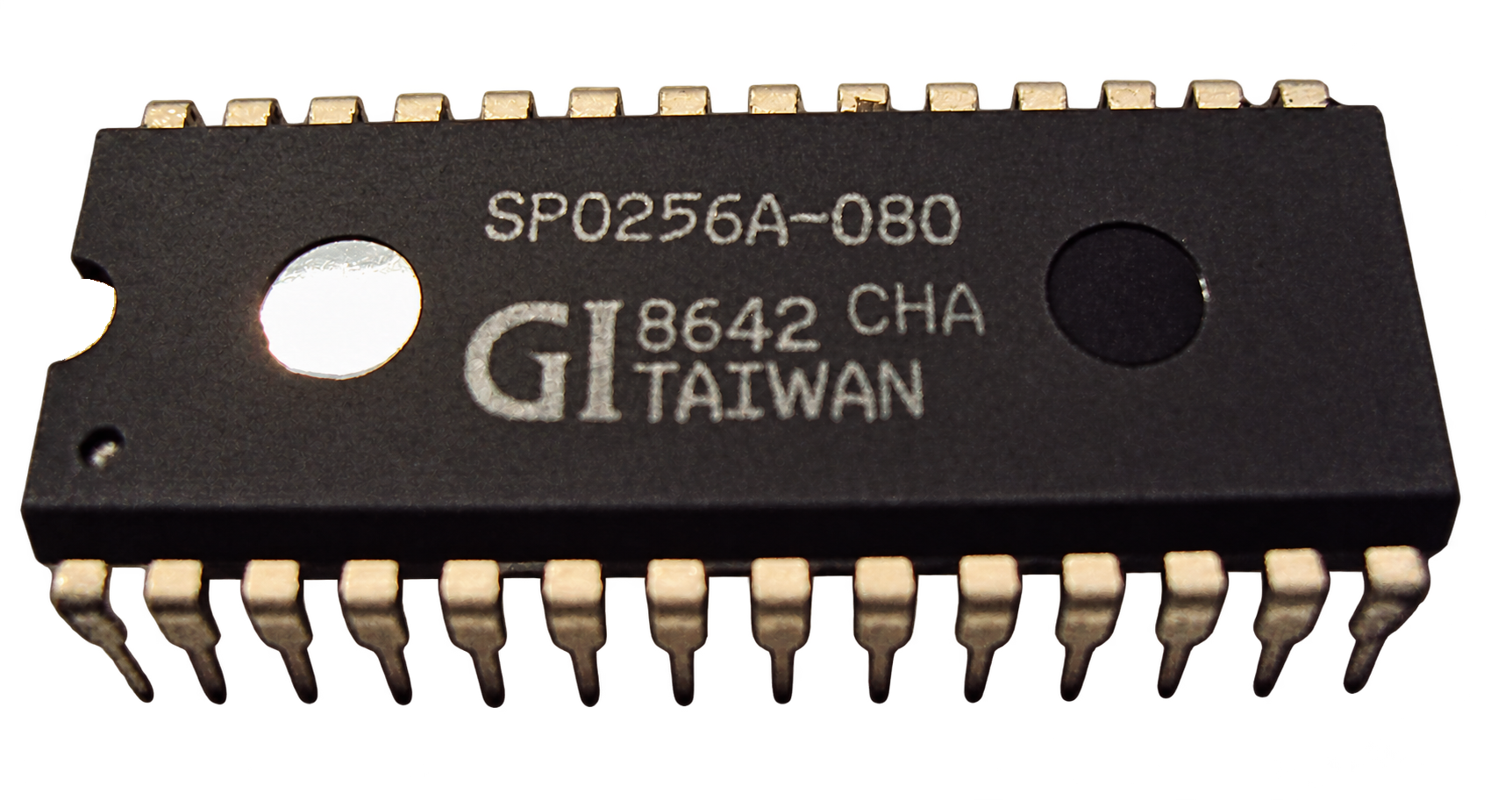
The supplied photograph shows a 28-pin DIP marked “SP0256A-080,” with the General Instrument logo and “TAIWAN.” A second line reads “8642 CHA.” The part number is direct evidence that this is a distinct SP0256A-marked specimen. The remaining line may encode production or lot information, but we have not found a reliable GI key for decoding it.
The SP0256A speech engine
The SP0256A is a single-chip speech processor, not a digital recording player. Its control logic reads compact speech parameters and sends them to a programmable digital filter that models vocal-tract resonances. The filter is excited by voiced pulses or noise, and the chip produces a pulse-width-modulated digital output that is filtered externally to recover audio. GI’s family documentation describes a 12-pole vocal-tract model and serial speech-ROM support. This shared engine is the foundation of the AL2 allophone chip and the custom program variants.
What the “080” suffix tells us
The suffix distinguishes this specimen from the familiar SP0256-AL2 and from other application-specific SP0256 parts. A third-party parts listing describes the SP0256-080 as a processor used with programmed ROM to produce the 59 English allophones and five pauses associated with an AL2-style set. GI’s generic documentation confirms that the platform can use external serial speech ROM, so that configuration is technically consistent with the family design. However, we have not located a GI datasheet, application note, or ROM map that confirms the exact intended use or built-in contents of the -080 part. The reseller description is a useful lead, not a verified manufacturer specification.
Internal program and external speech ROM
GI documentation explains that speech information can be supplied from the SP0256’s internal ROM and/or from a compatible external serial speech ROM. This lets a design combine the processor’s speech engine with different prepared speech data. The SP0256A-080 could therefore be part of a ROM-based speech system, but the suffix alone does not tell us which external ROM, phrase set, or host circuit it was paired with. Its original system remains unidentified.
How it differs from the SP0256-AL2
The AL2 is a well-documented configuration with 59 allophones and five pauses in its internal speech program. That known repertoire made it suitable for a controller to concatenate sounds into words. The SP0256A-080 should not be assumed to contain the same allophones simply because it shares the SP0256A engine. Until its ROM contents or companion circuit are identified, the AL2 program is a comparison point rather than a description of this chip.
A newly documented family member
The 080 marking adds another documented specimen to the SP0256 family. Its package and label establish the part designation; GI’s family documentation explains the speech engine it belongs to; and the surviving secondary listing offers a clue about a possible ROM pairing. The exact speech program, original customer, and product are still open questions. Keeping those limits visible helps distinguish what the chip itself proves from what remains a research lead.