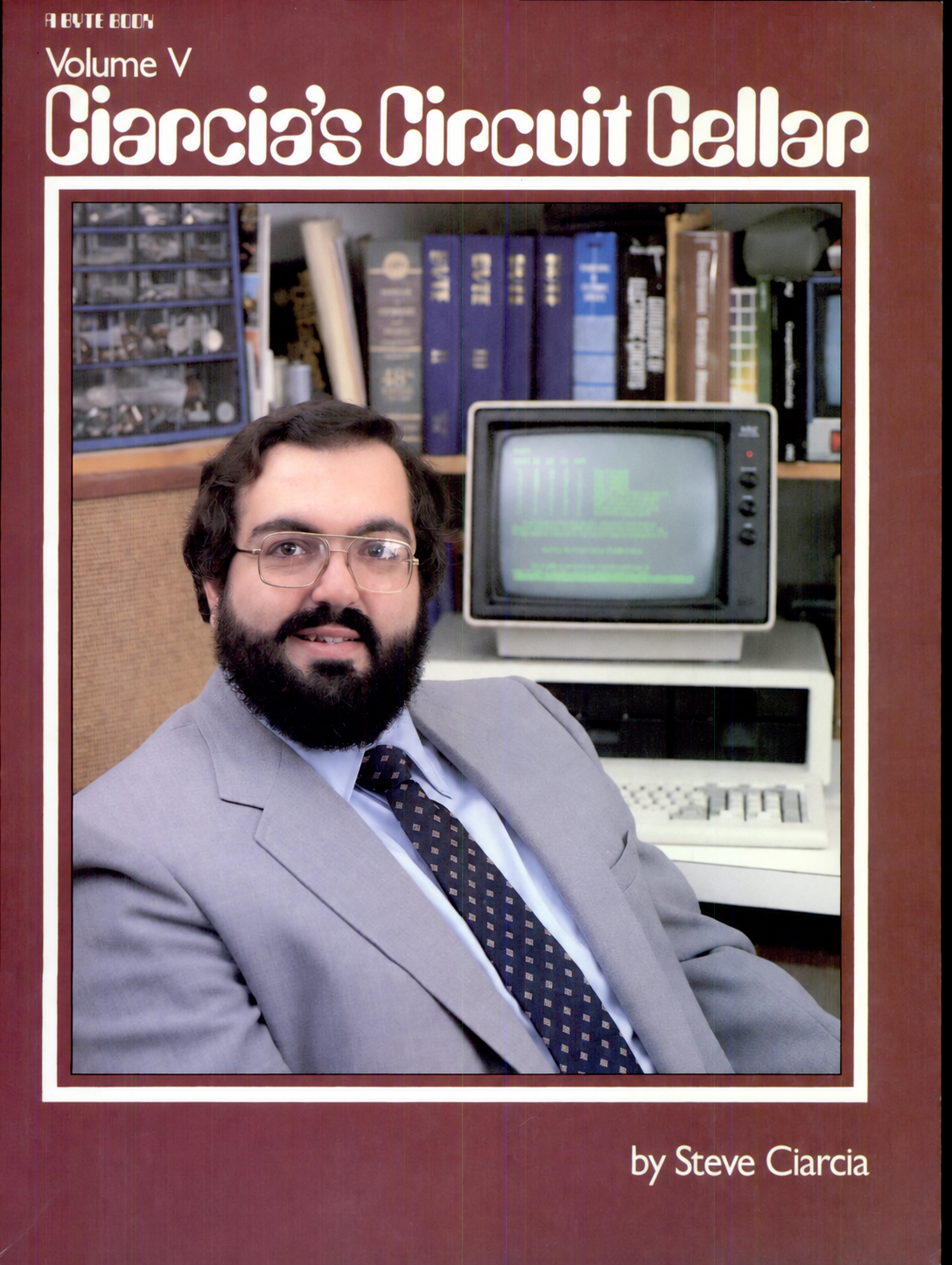
Ciarcia’s Circuit Cellar, Volume V
Steve Ciarcia
Collects July 1983–December 1984
Giving a synthetic voice more expression
Volume V brings the speech enthusiast to “Build a Third-Generation Phonetic Speech Synthesizer,” Ciarcia’s March 1984 BYTE project built around the Silicon Systems SSI-263. After the earlier talking circuits and Microvox’s text-to-speech system, the attraction here is control over the character of the voice itself.
Both the Votrax SC-01A and the SSI-263 synthesize speech from phonemes; the change is not a move away from recorded words. The SSI-263 offers a richer set of programmable controls for the sounds it generates, giving the experimenter more ways to shape that familiar robotic accent.
More than choosing the next sound
The SSI-263’s register interface lets software control phoneme selection and duration, speech rate, inflection, amplitude, and articulation. Those controls make the chip interesting beyond simply reading a sentence. A builder can explore how timing, pitch, and transitions affect intelligibility—and how they produce a distinctive synthetic personality.
The chip still needs a host to supply its instructions. Text-to-speech conversion is a separate software task, not a dictionary hidden inside the synthesizer. Reading the project with that distinction in mind helps explain both the flexibility of phonetic speech and the work required to make it sound convincing.
A project worth returning to
For today’s collector, the construction article provides a contemporary starting point for understanding the SSI-263 as working hardware. It connects the chip’s programming features with the practical question that still draws people to these devices: what can you make this voice do?
The project remained useful well beyond its original computers. In 2014, synthesizer builder Jean-Luc Deladrière returned to Ciarcia’s article while experimenting with an SSI-263 and an Arduino. That later work illustrates why a collection like this retains its value: the host computer changes, while the curiosity about the voice survives.
A wider bench to explore
The rest of the volume places the speech synthesizer within Ciarcia’s broader world of hands-on electronic construction. Those projects offer further territory to explore once the voice circuit has captured your attention, rather than competing with it as the museum’s main interest.
Read after Volume IV, Volume V makes a satisfying progression: first turn written words into phonemes, then investigate how much expression can be drawn from the hardware that speaks them.
Image gallery
Further reading
Featured exhibit: SC-02 / SSI-263 / 78A263
Find one for your collection
Looking for a copy of Ciarcia’s Circuit Cellar, Volume V? Explore listings on eBay or Amazon to add this book to your collection.