PHONEME SPEECH · VOTRAX / SILICON SYSTEMS / ARTIC
Votrax Family
Compare the SC-01, SC-01A, and SC-02 / SSI-263 lineage: related electronic voices with different interfaces and expressive controls.
Overview
The Votrax family brought an electronic vocal tract to talking machines. Instead of storing complete spoken words, these chips synthesize speech from programmed sound sequences. The SC-01 and SC-01A provide the early voice; the later SC-02 / SSI-263 line adds much greater software control. Several names and markings belong to this later line, so comparing the interface and revision matters as much as reading the name on the package.
Image gallery
SC-01: the original single-chip voice
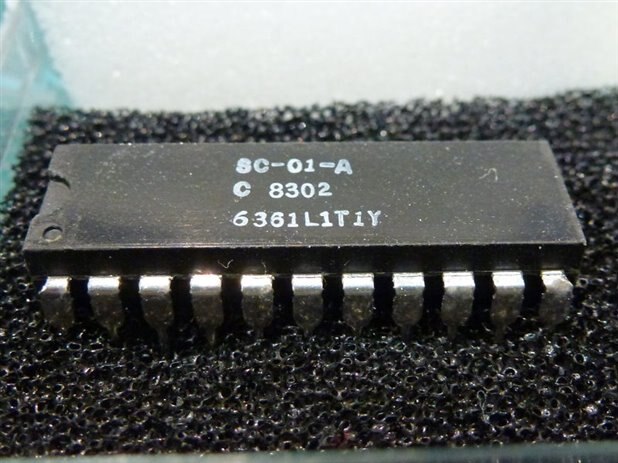
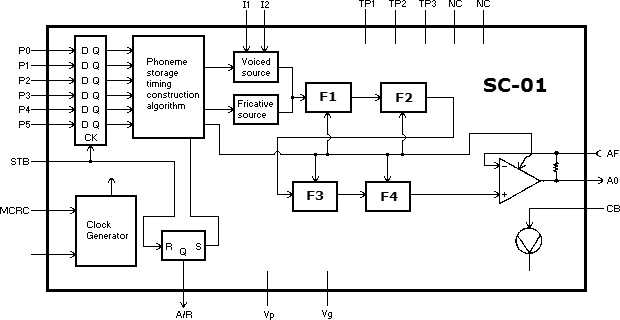
The SC-01 uses six phoneme-selection bits, a strobe, and an acknowledge/request signal. Its 64 codes include speech sounds, pauses, and a stop. Two inflection inputs select four pitch levels. Phoneme transitions are handled within the synthesizer. Changing the master clock alters the voice and phoneme timing together. Text conversion and message storage belong to the surrounding system.
SC-01A: a revision of the same architecture
SC-01A refines the early voice through changed phoneme parameters. Jonathan Gevaryahu’s ROM examination reported adjustments to a few phonemes, apparently to improve sound quality and reduce DC bias. It retains the early interface and repertoire, so both versions share one exhibit page.
SC-02 / SSI-263: more expressive software control
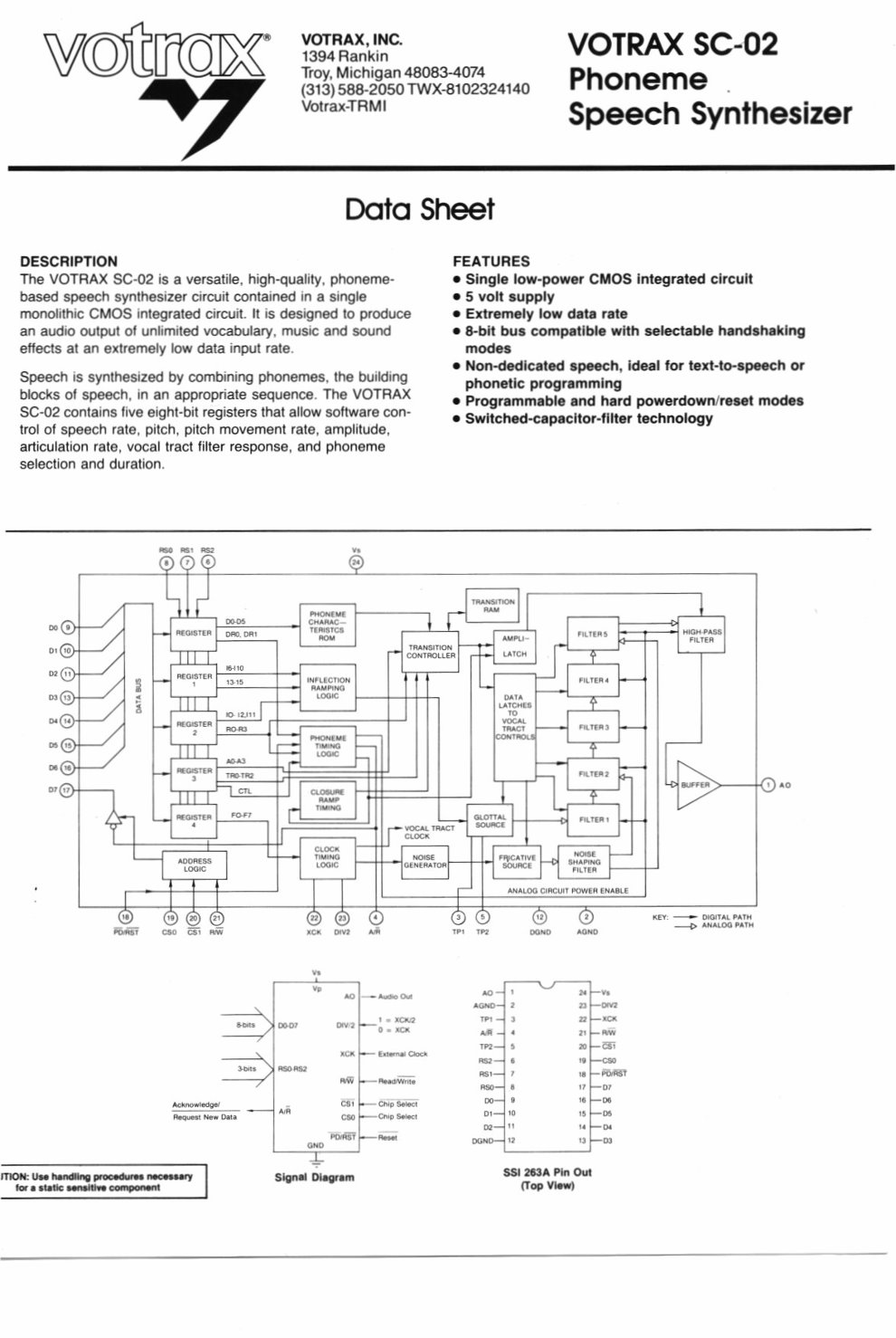
SC-02 is the Votrax designation associated with the Silicon Systems SSI-263 line. The SSI-263A datasheet describes five eight-bit registers controlling phoneme selection and duration, speech rate, pitch and pitch movement, articulation, amplitude, and filter response. An eight-bit bus and selectable handshaking modes give software a richer interface. This lets an application shape the timing and character of speech more directly than the early SC-01 interface.
SSI-263A, 78A263, and Artic 263 markings
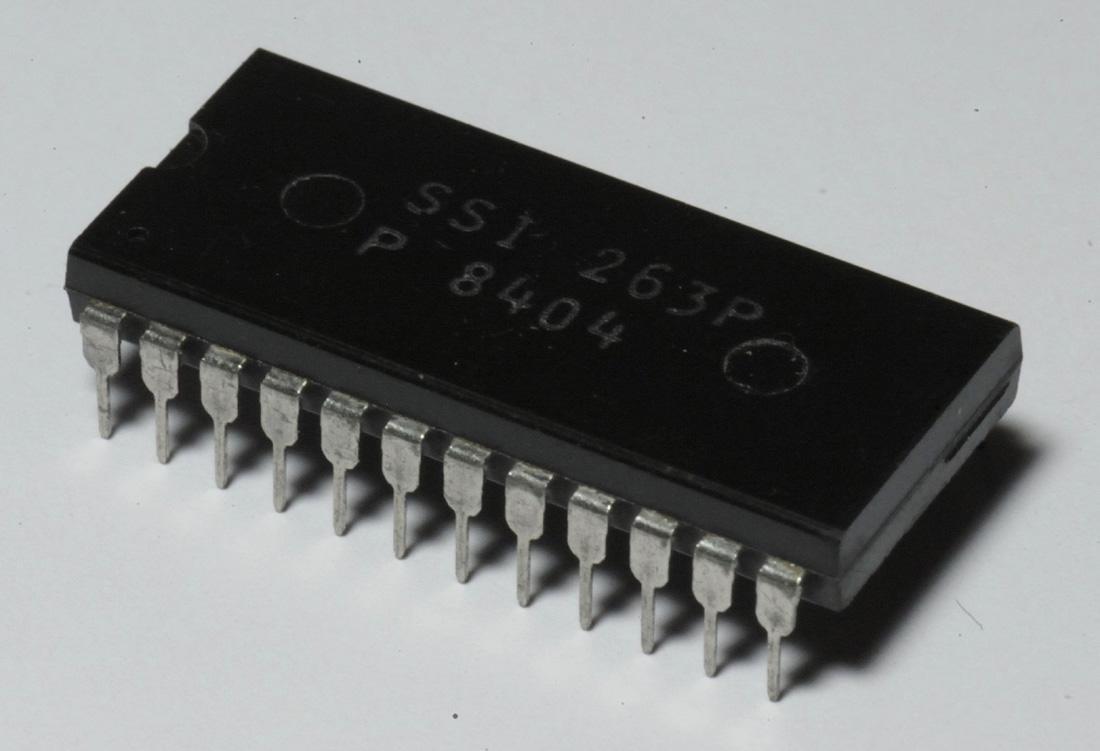
SSI-263A and the later SSI 78A263A designation appear in Silicon Systems documentation. “78A263” and “Artic 263” also occur in references to this later speech line. These names should not be presented as unrelated synthesis technologies. Keep the full marking, suffix, and relevant datasheet when identifying a physical chip: a shared lineage does not establish that every revision or branded part has identical electrical behavior.
What they share—and what does not transfer
All of these voices are built from phoneme instructions, with the supporting system deciding how to pronounce words. Their vocabulary is therefore not limited to a built-in list of complete utterances. The SC-01 code sequence should not be sent unchanged to an SSI-263: sound-code assignments and the control interface differ. A later chip is not a drop-in replacement for the early 22-pin part. Likewise, a text-to-speech box and a bare speech chip are different levels of the system.
Which generation is better for which task?
The SC-01 family offers a comparatively simple interface and the unmistakable voice heard in its historical applications. The SSI-263 generation offers finer software control for projects needing more expressive timing, pitch, and voice shaping. For restoration, the correct chip and revision for the board matter most. For experimentation, the later controls offer more freedom, while the original design remains an appealing way to explore phoneme speech.
Compare the generations
| Feature | SC-01 | SC-01A | SC-02 / SSI-263 line |
|---|---|---|---|
| Relationship | Original single-chip design | Revised phoneme parameters | Later programmable generation |
| Speech construction | Phoneme sequences | Phoneme sequences | Phoneme sequences |
| Basic interface | Six sound bits, STB, A/R | Same basic SC-01 interface | Eight-bit register bus |
| Pitch control | Four levels through I1/I2 | Four levels through I1/I2 | Programmable pitch and movement |
| Timing | Internal phoneme timing; clock affects rate | Same basic timing approach | Programmable duration and speech rate |
| Other voice controls | Limited external controls | Limited external controls | Articulation, amplitude, filter response |
| Package comparison | 22 pins | 22-pin family | Different package and pinout |
| On-chip text parser | No | No | No |
| Representative machines | Early speech systems and Gottlieb hardware | Type N Talk, HERO speech card, Voice Box | SynPhonix 200, Votalker, later Mockingboard models |
Names, revisions, and markings
| Designation | How to read it |
|---|---|
| SC-01 | Early Votrax phoneme synthesizer |
| SC-01A / SC-01-A | Revision of SC-01 |
| SC-02 / SSI-263 | Names associated with the later synthesizer line |
| SSI-263A | Silicon Systems revision documented by its own datasheet |
| SSI 78A263A / 78A263 | Later Silicon Systems designation / commonly shortened marking |
| Artic 263 | Name associated with the later 263 line |
Hear the Type N Talk
“The juice of lemons makes fine punch. A box was thrown beside the parked truck.”
Hear Q*bert
Q*bert’s expressive, speech-like gibberish.
Hear Black Hole
“Do you dare to enter the black hole?” — Gottlieb, 1981.
Individual processors and companion chips
Documentation and downloads
Machines using the Votrax family
These cards span both generations. Open a device to see which chip its particular model or board uses.
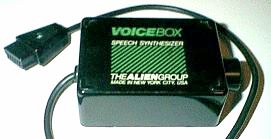
The Alien Group
Voice Box
The Alien Group’s Atari speech peripheral used a Votrax SC-01-A, pronunciation dictionaries, and an SIO connection to make the television speak.
Explore Voice Box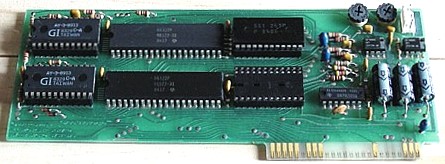
Sweet Micro Systems
Mockingboard
Sweet Micro Systems’ Apple II sound-card family combined music and effects with optional SC-01 or SSI 263 phoneme speech.
Explore Mockingboard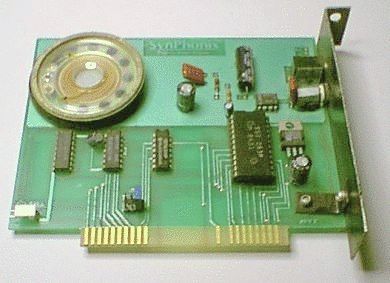
Artic Technologies
SynPhonix 200
Artic Technologies’ IBM PC speech card used SSI 263 phoneme synthesis and supported spoken screen access with Artic Vision.
Explore SynPhonix 200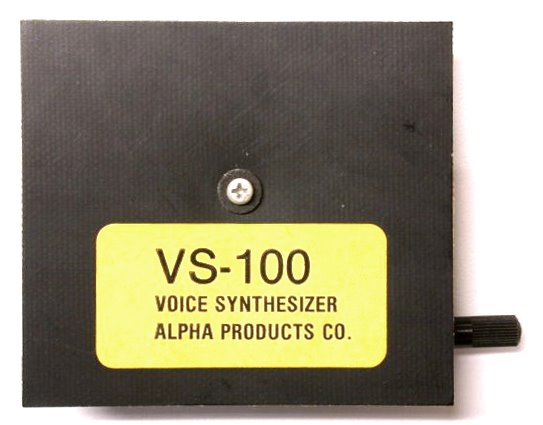
Alpha Products
VS-100
Alpha Products’ TRS-80 speech accessory used Votrax SC-01 phonemes, with text-to-speech software and programmable BASIC output.
Explore VS-100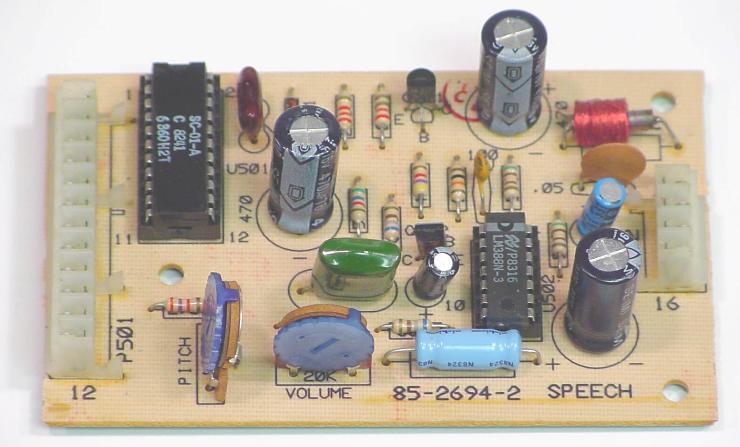
Heathkit
HERO 1 Speech Card
Heathkit’s ET-18-2 voice option gave HERO 1 phoneme-based speech through a Votrax SC-01-A synthesizer.
Explore HERO 1 Speech CardMicromint
Sweet Talker Parallel
Micromint’s Votrax SC-01 phoneme interface for parallel-port projects.
Explore Sweet Talker ParallelMicromint
Sweet Talker Apple II
Micromint’s Apple II speech card using Votrax SC-01 phoneme synthesis.
Explore Sweet Talker Apple IIMicromint
Sweet Talker II
Micromint’s SSI-263 Apple II speech board, supplied with text-to-speech software.
Explore Sweet Talker IIMicromint
LIS’NER 1000
Micromint’s SP1000 speech-recognition interface, with an SSI-263 speech option for Apple II.
Explore LIS’NER 1000Gottlieb
Gottlieb System 80 Sound & Speech Board
Gottlieb’s MA-216 / B-20887 board combined game sound with Votrax SC-01 phoneme speech.
Explore Gottlieb System 80 Sound & Speech BoardMicrovox Text-to-Speech Synthesizer
Microvox Text-to-Speech Synthesizer for RS232.
Explore Microvox Text-to-Speech Synthesizer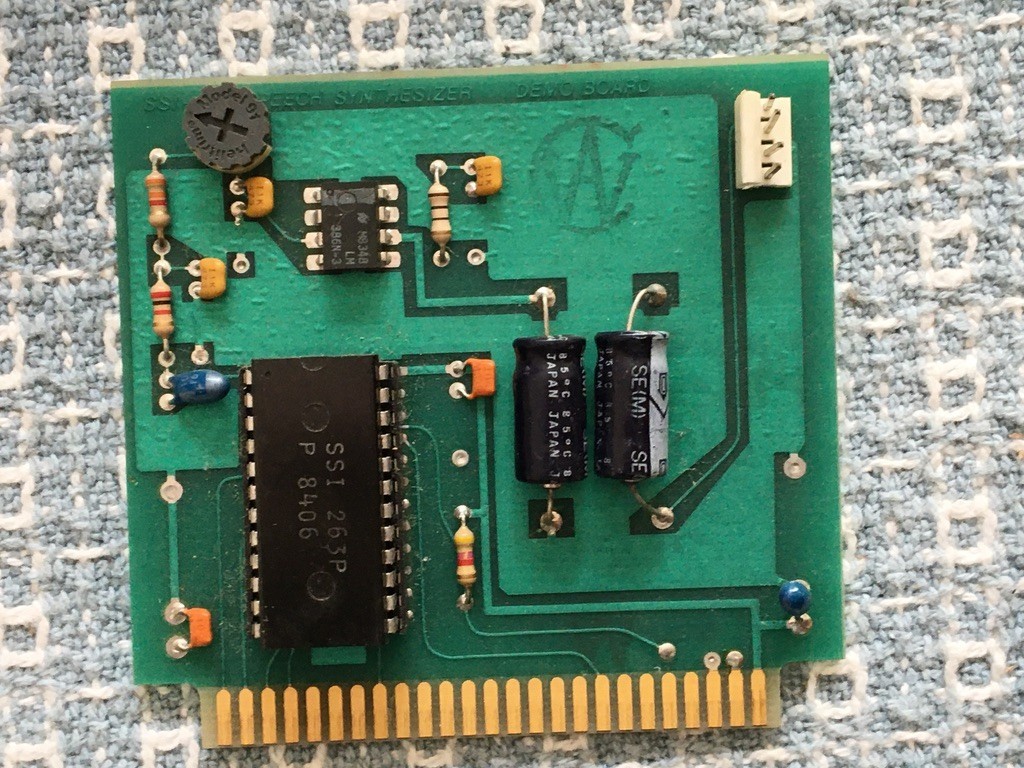
SSI-263 Speech Synthesizer Demo Board
A compact SSI-263P speech demonstration card with an audio amplifier and an Apple II-style edge connector.
Explore SSI-263 Speech Synthesizer Demo Board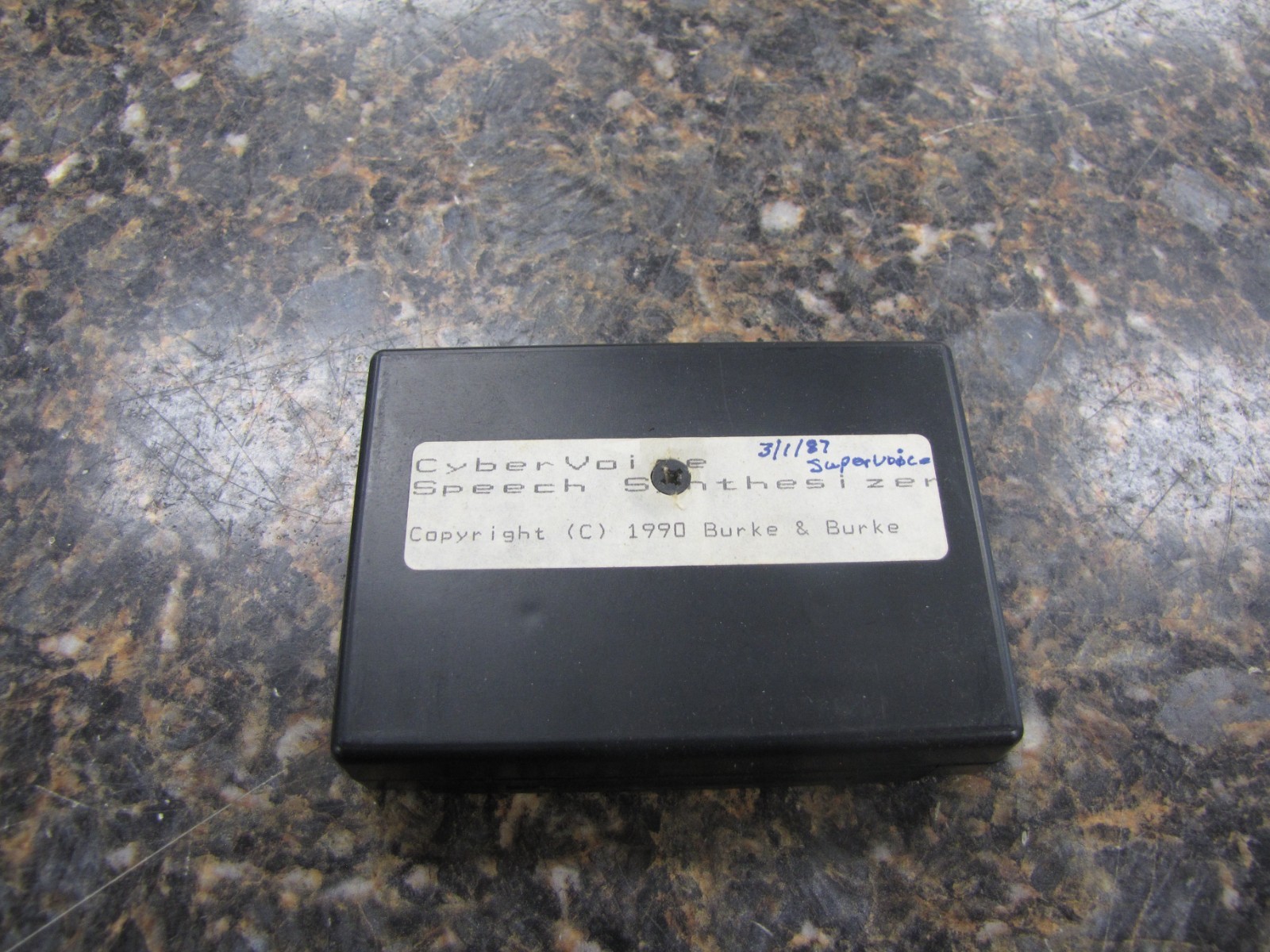
Burke & Burke
Burke & Burke CyberVoice
Burke & Burke’s SC-02-based speech cartridge paired programmable pronunciation and voice control with OS-9 Level II software.
Explore Burke & Burke CyberVoice